Alex Theologis Unveils Practical ICM Mastery Course for Tournament Players
Wendy Wolf · Sep 2, 2026

Alex Theologis Unveils Practical ICM Mastery Course for Tournament Players
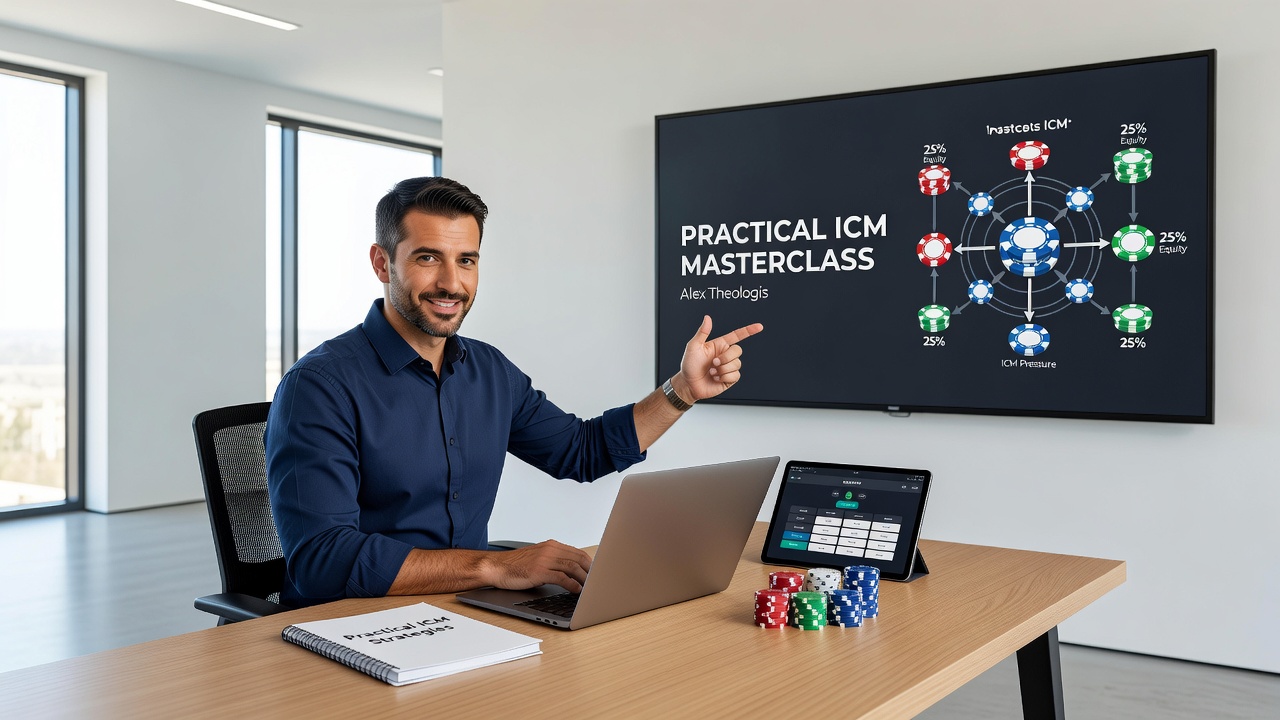
Alex Theologis, a recognized poker coach and active tournament participant, has introduced Practical ICM Mastery as a new educational product designed to advance player understanding of Independent Chip Model concepts beyond introductory levels in tournament settings, and the announcement positions this resource as a targeted tool for those seeking deeper strategic application during events where chip values fluctuate based on payout structures and remaining player counts.
Many participants study basic ICM principles through standard materials yet observers note that comprehensive mastery stays uncommon across the competitive field, while the course focuses on practical exercises and decision frameworks that address real tournament scenarios rather than isolated theoretical examples, and this distinction forms the core of the product's positioning according to details shared in the launch materials.
Core Focus of the New Training Resource
The program targets gaps that often appear after players grasp initial ICM calculations such as equity adjustments near pay jumps or bubble stages, and it expands into layered strategic thinking that incorporates stack sizes, opponent tendencies, and stage-specific variables simultaneously, whereas traditional study resources frequently stop at foundational formulas without bridging to integrated in-game application.
Research into tournament outcomes indicates that players who advance beyond surface-level ICM awareness demonstrate measurable improvements in survival rates during late stages, and the new offering supplies structured modules that guide users through progressive complexity rather than presenting disconnected concepts, which allows for incremental skill building across multiple sessions.
Background on ICM Application in Tournaments
Independent Chip Model calculations assign monetary value to chips based on remaining prize pool distribution instead of treating all chips as equal, and this framework influences critical choices including push-fold decisions, three-bet sizing, and risk assessment during pay jumps, while experts have documented how deviations from ICM-optimal lines correlate with reduced expected value in large-field events tracked over multi-year data sets from major circuits.
Those who have examined historical tournament results observe that basic ICM study produces initial gains yet plateaus occur when players encounter dynamic variables such as varying stack depths or ICM pressure combined with reads on specific opponents, and Practical ICM Mastery incorporates these elements through scenario-based training that mirrors actual table conditions encountered at felt during major series.
Delivery Format and Target Audience
The product arrives as an online curriculum with video lessons, interactive drills, and reference materials that participants can access at their own pace, and it caters primarily to intermediate and advanced tournament players who already possess working knowledge of standard ICM tools yet seek refinement in high-pressure spots, whereas recreational participants new to the concept may find the depth better suited after completing entry-level resources first.
Launch communications emphasize accessibility across different time zones and schedules, and the structure supports repeated review of key modules so users can reinforce patterns through deliberate practice, while data from similar poker education initiatives shows higher retention when content combines visual explanations with hands-on application rather than passive viewing alone.
Industry Context Around Advanced Strategy Tools
Poker training markets have expanded steadily with specialized products addressing specific skill domains, and announcements of new releases often coincide with upcoming major tournament calendars that draw larger fields and heighten the value of refined decision-making, whereas broader industry reports from gaming research groups highlight continued interest in analytical approaches that quantify risk-reward ratios during variable chip environments.
According to coverage on established poker media platforms, the emphasis on practical mastery over rote memorization aligns with observed trends among professionals who integrate multiple data points into real-time choices, and links to external resources such as PokerNews coverage of tournament developments and academic examinations of decision theory in games provide additional context for those exploring the mathematical underpinnings of ICM models.
Conclusion
The introduction of Practical ICM Mastery marks a focused addition to available training options for tournament participants aiming to elevate their strategic depth, and the product's emphasis on bridging theory with applied scenarios addresses documented gaps between basic study and consistent execution under live conditions, while ongoing tracking of player performance metrics across circuits continues to underscore the role of advanced modeling in optimizing outcomes during payout-critical phases.